
Quick Answer: A NY Workers' Comp Board hearing is a proceeding where a Workers' Compensation Law Judge reviews a disputed part of your claim and issues a decision. Hearings happen when the insurance carrier disputes your injury, denies treatment, or contests your ability to work. The judge's ruling is legally binding unless a party appeals it within 30 days.
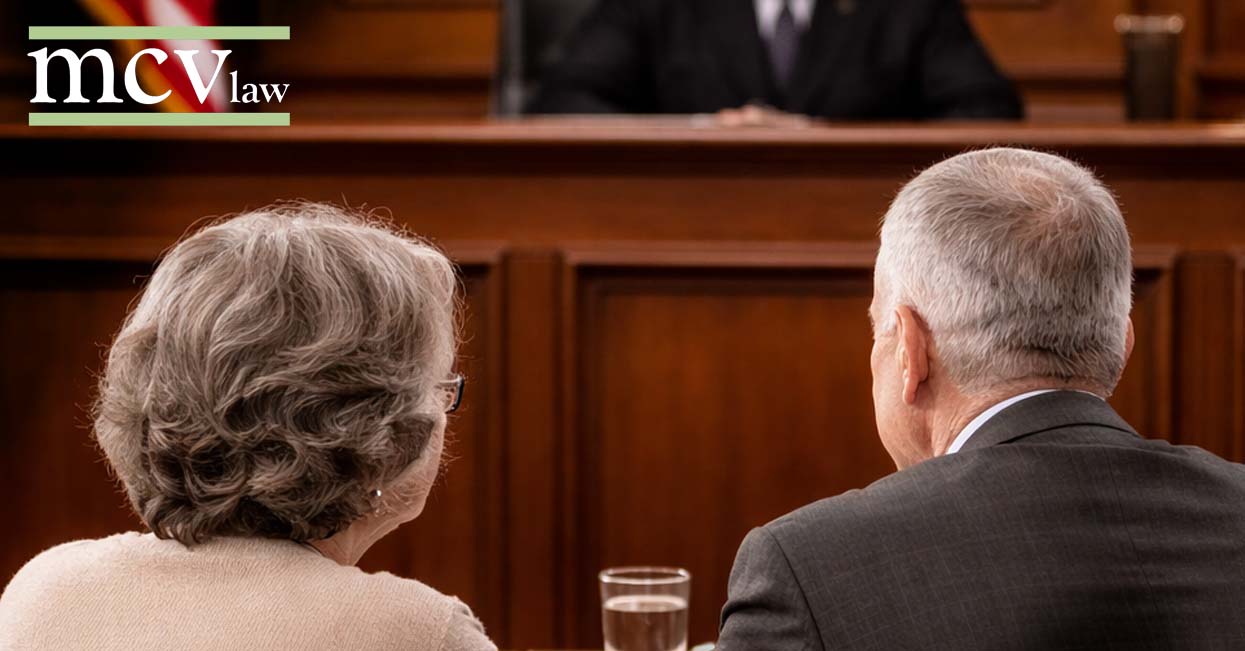
A NY Workers' Comp Board hearing is scheduled when the insurance carrier disputes some part of your claim rather than approving it as filed. The hearing takes place before a Workers' Compensation Law Judge, who reviews the medical evidence and testimony before issuing a decision. There is no jury, and most hearings now happen by video rather than in person.
What you bring, how you testify, and how you respond to cross-examination all affect the outcome. Call 315-471-1664 if you have a hearing date and want an attorney reviewing your file beforehand.
Key Takeaways About NY Workers' Comp Board Hearings
- A hearing gets scheduled when the insurance carrier disputes some part of your claim, not automatically for every injury.
- The Workers' Compensation Law Judge decides the case alone, with no jury involved.
- What you bring and how you testify directly affects whether the judge rules in your favor.
- A judge's decision becomes final unless a party appeals it within 30 days.
- The appeals process has multiple levels, starting with a three-member Board Panel review.
Why Do NY Workers' Comp Hearings Happen?
A NY workers' comp hearing happens when the insurance carrier disputes some part of an injured worker's claim rather than approving it outright. Not every workers' comp case goes to a hearing. Many claims get resolved through claims examiners and conciliation before a judge ever gets involved.
Hearings get scheduled for reasons like:
- The carrier controverts the claim, meaning it disputes that the injury is work-related at all or that you did not file your claim in time.
- An independent medical examination (IME) contradicts what your treating doctor found
- The carrier denies a specific treatment or procedure your doctor recommended
- The parties disagree over your degree of disability or ability to return to work
Each of these disputes puts a different kind of evidence in front of the judge. A treatment denial hearing looks nothing like a hearing over whether your degree of disability qualifies you for continued lost wage benefits.
How MCV Law Prepares Clients for a Workers' Comp Hearing

MCV Law attorneys review the full medical and claims file before a hearing date arrives, not the week beforehand. That review identifies which issue the carrier disputed and what evidence answers it directly.
Preparation matters because a workers' comp hearing rewards specificity. A vague answer about pain levels or work capacity gives the carrier's attorney an opening. A client walking in with a clear, consistent account of their injury and limitations gives the judge less to question.
MCV Law attorneys represent clients at hearings across Syracuse, Auburn, and Chittenango, and the same attorney who reviewed the file typically appears at the hearing itself. That continuity means the judge sees a consistent record, and the client does not have to re-explain their case to a new face at each stage.
Who Attends a NY Workers' Comp Hearing?
A NY workers' comp hearing includes the Workers' Compensation Law Judge, the injured worker, and attorneys or representatives for both sides. Unlike a courtroom trial, there is no jury, and the format runs far less formally than most workers expect.
The people typically present at a hearing include:
- The Workers' Compensation Law Judge (WCLJ), who reviews evidence and issues the decision
- The injured worker, whose testimony often carries significant weight
- The worker's attorney, who presents evidence and questions the worker
- The insurance carrier's attorney, who cross-examines the worker and presents opposing evidence
- A stenographer or recording system that creates an official transcript of the hearing
Most NY workers' comp hearings now happen virtually, using video conferencing rather than requiring in-person attendance at a Board office. A worker can request an in-person hearing instead, though most cases proceed by video unless a party asks otherwise.
What Documents Should You Bring to a Workers' Comp Hearing?
Bring every piece of medical documentation related to your injury, along with wage records and any correspondence from the insurance carrier. A hearing moves fast, and missing documentation forces the judge to schedule a follow-up hearing instead of resolving the issue that day.
Documents worth having on hand include:
- Medical records and treatment notes from every provider who has seen you for this injury
- The independent medical examination report, if the carrier ordered one
- Pay stubs or wage records showing your earnings before and after the injury
- Any written denial or dispute letter the carrier sent regarding your treatment or benefits
- A written timeline of your symptoms, treatment, and work status since the injury
A judge working from a complete file makes a faster, more accurate decision. A judge working from a partial file often has to schedule another hearing just to fill the gaps.
What Does a Workers' Comp Judge Want to Hear From You?
A workers' compensation judge wants clear, consistent testimony about your injury, your treatment, and your current work capacity. Vague or inconsistent answers create doubt, even when the underlying medical facts support your claim.
Testimony works best when a worker sticks to what they know directly. Describing exact physical limitations, specific pain triggers, and the tasks you can no longer perform carries more weight than general statements about feeling bad.
Answer only the question asked, and avoid guessing at information you do not have.
What Happens During Cross-Examination by the Insurance Carrier's Attorney?
Cross-examination at a workers' comp hearing means the insurance carrier's attorney questions you directly, often looking for inconsistencies between your testimony and your medical records or daily activities. This part of the hearing tends to feel more adversarial than the rest of the proceeding.
Carrier attorneys commonly probe areas like:
- Whether your reported symptoms match what your medical records document
- Any social media posts or activities that might contradict claimed limitations
- Gaps in treatment or missed medical appointments
- Prior injuries to the same body part before your workplace accident
- Inconsistencies between different statements you have given about the injury
Staying calm and consistent through this questioning matters more than winning any single exchange. A worker who gets defensive or contradicts their own earlier testimony hands the carrier's attorney exactly what they came looking for.
Contact Us for a Free Consultation
What Are Common Rulings After a Workers' Comp Hearing?
A workers' comp judge issues one of several standard rulings after a hearing, depending on the issue in dispute. Each ruling type carries different consequences for your benefits and next steps.
| Ruling | Meaning |
|---|---|
| Established | The judge confirms the injury is work-related and compensable |
| Continued | The judge schedules a further hearing to gather more evidence |
| Amended | The judge changes a prior finding, such as the degree of disability |
| Disallowed | The case is denied by the judge and no benefits are payable |
A continued ruling is not a loss. It could mean the judge wants more medical evidence before making a decision, which can work in a worker's favor if that evidence supports the claim. A disallowed ruling, by contrast, starts the clock on your right to appeal.
How Long Does It Take to Get a Decision After a Hearing?

Most NY workers' comp hearings result in a written decision issued within days of the hearing itself. According to the Workers' Compensation Board's issue resolution process, a notice of decision reflecting the judge's findings and any awards generally goes out within a few days after the hearing concludes. Complex cases involving multiple disputed issues may take longer if the judge needs additional medical review before ruling.
That written decision becomes the operative document for your case going forward. If you disagree with what it says, the clock on filing an appeal starts from the date it gets filed, not the date you actually read it.
Can You Appeal a NY Workers' Comp Hearing Decision?
Yes, a party who disagrees with a workers' comp judge's decision can file an appeal within 30 days of the decision's filing date. Missing that deadline deems the judge's decision final under Workers' Compensation Law Section 23.
New York's appeal process for workers' comp decisions runs through several possible levels:
- Application for Board Review, decided by a three-member Board Panel
- Full Board Review, also available if the Board Panel's decision was not unanimous
- Appeal to the Appellate Division, Third Department, of the New York Supreme Court
- Appeal to the New York Court of Appeals, the state's highest court
The Workers' Compensation Board's appeals process allows the Board Panel to affirm, modify, or reverse the judge's decision, or send the case back for additional hearings. Each level up the chain narrows the odds of reversal, which makes getting the first hearing right the most important step in the entire process.
FAQ for NY Workers' Comp Board Hearing
Do I need a lawyer for my workers' comp hearing?
Maybe, you may need a lawyer for a workers' comp hearing if the carrier disputes your claim, denies treatment, or disagrees about your ability to work. Uncontested claims that never reach a hearing generally require less legal involvement, although the insurance company will also have an attorney representing their interests at a hearing.
Can I attend my workers' comp hearing by phone instead of video?
Yes, depending on the nature of the hearing. A video appearance is required if testimony is taking place. A worker without reliable internet access should contact the Board in advance to discuss alternative arrangements.
What happens if I miss my scheduled hearing?
Missing a scheduled hearing may result in the judge deciding the case based on the existing record without your testimony. Contact the Board or your attorney immediately if a conflict prevents you from attending.
How long does a typical workers' comp hearing last?
A typical NY workers' comp hearing runs a relatively short amount of time, often well under an hour, since most hearings focus on a narrow, specific dispute rather than the entire case history.
Will my employer be at the hearing?
Not usually. The insurance carrier's attorney represents the employer's interests at most hearings, and the employer itself rarely attends unless called as a witness on a specific factual issue.
Can my case settle before the hearing actually happens?
Yes, many disputed workers' comp cases settle or resolve through negotiation before the scheduled hearing date. A hearing happens only when the parties cannot reach an agreement beforehand.
Get an Attorney Reviewing Your Workers' Comp Hearing Before Your Court Date
MCV Law attorneys have appeared before Workers' Compensation Law Judges across Syracuse, Auburn, and Chittenango, and reviewing that file before the hearing date is what turns a disputed claim into a supported one.
Call MCV Law at 315-471-1664 to have an attorney review your hearing notice and your file before you sit in front of a judge.