

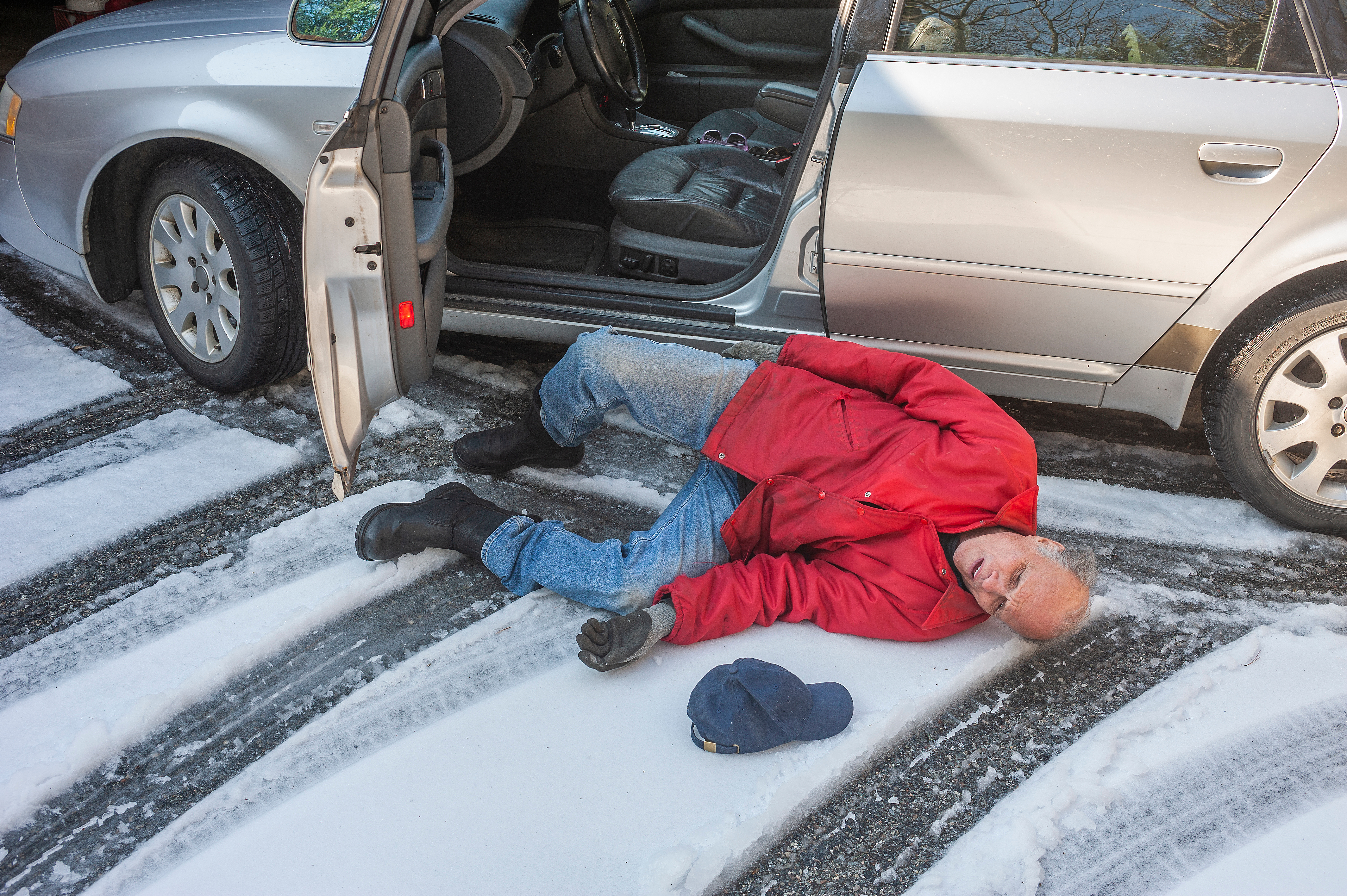
A slip and fall accident can change your day—and your life—in an instant. If you fell on an icy parking lot, tripped on a broken step, or slipped on a wet store floor in Central New York, you may be dealing with more than just pain. Medical bills, missed work, and uncertainty about what comes next can make an already difficult situation feel overwhelming.
New York premises liability law gives you the right to seek compensation when a property owner's negligence caused your fall. But these cases involve specific legal requirements—proof of notice, strict filing deadlines, and evidence that can disappear quickly. Understanding your rights and acting promptly can make the difference between recovering fair compensation and walking away with nothing.
This guide explains how fall injury claims work in New York, what steps to take after an accident, and how coordinated legal representation can protect your recovery when your injury also affects your ability to work.
Common Causes of Slip and Fall Accidents in Central New York
Central New York's climate creates hazards that residents face year-round, but winter months bring the highest risk. Syracuse receives roughly 10 feet of snow in an average year, and communities from Watertown to Binghamton share similar conditions that produce dangerous walking surfaces.
Winter and ice-related hazards:
- Icy sidewalks and parking lots that were not salted or sanded
- Snow-covered walkways hiding uneven pavement underneath
- Refrozen meltwater creating nearly invisible black ice patches
- Building entrances where tracked-in snow melts on tile or concrete floors
Year-round hazards:
- Wet or freshly mopped floors in grocery stores, restaurants, and retail shops without warning signs
- Broken or uneven stairs, cracked sidewalks, and damaged flooring
- Poorly lit stairwells, hallways, and parking structures
- Loose carpeting, missing handrails, or cluttered walkways
- Potholes and uneven surfaces in parking lots and driveways
Any of these conditions can cause serious injuries—broken bones, herniated discs, torn ligaments, traumatic brain injuries, and hip fractures—that require months or years of treatment.
How New York Premises Liability Law Works
Premises liability is the area of law that holds property owners responsible when dangerous conditions on their property cause injuries. In New York, the legal framework for these claims rests on three core principles.
Duty of care
Property owners owe a duty of care to people who are lawfully on their premises. The level of that duty depends on why you were there:
- Invitees (customers, tenants, delivery workers) are owed the highest duty. Property owners must regularly inspect for hazards and fix or warn about dangerous conditions promptly.
- Licensees (social guests) are owed a duty to warn about known dangers, though owners are not required to actively search for hidden hazards.
- Trespassers are owed the lowest duty, though property owners still cannot create intentional traps.
If you were a customer in a store, a tenant in an apartment building, or a visitor at a business, the property owner had a legal obligation to keep the premises reasonably safe.
Notice: actual and constructive
Proving that a dangerous condition existed is not enough on its own. Under New York law, you must also show that the property owner had notice of the hazard—meaning they knew or should have known about it before your fall.
- Actual notice means the owner had direct knowledge of the hazard. Evidence can include tenant complaints, prior incident reports, maintenance logs showing repeated repairs, or personal communications about the condition.
- Constructive notice means the condition existed long enough that a reasonable owner should have discovered and addressed it during routine inspections.
For example, if a grocery store employee mopped a floor and failed to place a "wet floor" sign, that may establish actual notice. If a pothole in a parking lot had been growing for months without repair, that may support constructive notice.
Comparative negligence
New York follows a pure comparative negligence system under CPLR §1411. This means you can still recover compensation even if you were partially at fault for your fall—but your recovery is reduced by your percentage of responsibility.
If a jury determines you were 25% at fault (for example, because you were looking at your phone), your compensation is reduced by 25%. Unlike some states, New York does not bar your claim entirely based on shared fault.
Property owners and their insurers frequently use comparative negligence arguments to reduce what they owe. Common defenses include claiming you were distracted, wearing inappropriate footwear, or ignoring an obvious hazard. An experienced personal injury attorney can counter these arguments with evidence about the property owner's failure to maintain safe conditions.
What to Do After a Slip and Fall in New York
The steps you take immediately after a fall can strengthen or weaken your claim. Evidence in premises liability cases—especially those involving ice, snow, or spilled liquids—can disappear within hours.
1. Report the incident
Notify the property owner, manager, or store supervisor before you leave. Ask for a written incident report and keep a copy. If the fall happened at a business, ask whether surveillance cameras cover the area—many businesses delete footage within 30 days.
2. Document everything
- Take photos and videos of the exact spot where you fell, including the hazard (ice, liquid, broken surface, poor lighting)
- Photograph your injuries and any damaged clothing or belongings
- Note the date, time, and weather conditions
- Get names and contact information from any witnesses
3. Seek medical attention promptly
Even if your injuries feel minor, see a doctor within 24–48 hours. Some injuries—concussions, soft tissue damage, internal bruising—may not show symptoms immediately. Medical records that connect your injury to the fall create essential evidence for your claim.
4. Preserve your own records
Keep copies of all medical bills, treatment records, prescriptions, and documentation of missed work. Start a brief daily log noting your pain levels, limitations, and how the injury affects your daily activities.
5. Contact a personal injury attorney
Before speaking with the property owner's insurance company, consult an attorney. Insurance adjusters may contact you quickly, seeking recorded statements or offering early settlements that do not reflect the full value of your injuries.
How MCV Law Builds Your Premises Liability Case
Building a strong fall injury case requires evidence that ties the property owner's negligence directly to your injury. At MCV Law, we focus on documenting each element the law requires.
What we investigate:
- Maintenance and inspection records showing whether the property owner followed reasonable safety practices
- Prior complaints, incident reports, or repair requests involving the same hazard
- Surveillance footage and photographs of the scene
- Weather reports and local conditions (particularly for ice and snow cases)
- Building code compliance and any prior violations
- Witness statements from people who saw the conditions or the fall itself
What we coordinate:
- Medical evidence connecting your injuries to the fall, including specialist evaluations when needed
- Documentation of lost wages, reduced earning capacity, and out-of-pocket costs
- Expert testimony from engineers, safety consultants, or medical professionals when the case requires it
For clients in Central and Northern New York—from Syracuse and Auburn to Watertown, Oswego, and Ithaca—our local knowledge matters. We understand the regional employers, property management companies, and municipal practices that affect how these cases are handled.
Types of Compensation Available in New York Fall Injury Cases
New York does not cap personal injury damages in premises liability cases. The compensation you may recover depends on the severity of your injuries and the strength of the evidence. Categories include:
Economic damages (documented financial losses):
- Past and future medical expenses, including surgery, rehabilitation, and medication
- Lost wages for time missed from work during recovery
- Reduced earning capacity if your injuries limit your ability to return to your previous job
- Out-of-pocket costs such as transportation to medical appointments and home care
Non-economic damages (quality-of-life impacts):
- Physical pain and suffering
- Emotional distress and mental anguish
- Loss of enjoyment of daily activities
- Permanent scarring or disfigurement
In cases involving reckless or intentional conduct—such as a landlord who repeatedly ignored tenant complaints about a dangerous stairway—punitive damages may also be available, though New York courts award them rarely.
Critical Deadlines You Cannot Miss
Timing matters in every premises liability case. New York law sets strict filing deadlines, and missing them can permanently bar your claim.
Private property claims
Under CPLR §214(5), you have 3 years from the date of the accident to file a personal injury lawsuit against a private property owner. This includes falls at stores, restaurants, apartment buildings, office complexes, and private residences.
Government property claims
If your fall occurred on property owned or maintained by a city, county, or state agency—a public sidewalk, government building, park, or school—the deadlines are significantly shorter:
- 90 days to file a Notice of Claim under General Municipal Law §50-e
- 1 year and 90 days to file the actual lawsuit under GML §50-i
These compressed deadlines catch many people off guard, especially while they are focused on medical treatment. The 90-day window for a Notice of Claim begins on the date of the accident—not the date you finish treatment or realize the full extent of your injuries.
The storm-in-progress doctrine
In winter fall injury cases, New York's "storm-in-progress" doctrine is an important consideration. Under this rule, property owners are generally not required to clear snow and ice while a storm is actively happening. Their duty to clear and treat surfaces begins within a reasonable time after the storm ends.
This doctrine does not protect property owners who ignored pre-existing icy conditions before the storm, or who allowed hazardous conditions to persist for days after snowfall stopped. Establishing the timeline—when the storm ended, when the fall occurred, and what the property owner did in between—is critical to winter premises liability claims.

When Your Fall Also Involves a Workplace Injury
Not every fall is a straightforward premises liability case. If you were injured while working—whether you fell on a client's property, in a warehouse, on a construction site, or during a delivery—your claim may involve overlapping legal matters.
Workers' Compensation covers medical treatment and a portion of lost wages for on-the-job injuries, regardless of fault. But if a third party's negligence caused your fall (a building owner, a maintenance company, a general contractor), you may also have a personal injury claim against that party.
Social Security Disability may become relevant if your fall injuries prevent you from working for 12 months or longer.
These claims interact in important ways. Workers' Compensation benefits may create offsets against personal injury settlements. Filing for Social Security Disability involves its own evidence requirements and timelines. Handling these matters separately—or with different attorneys—can lead to conflicts, missed benefits, or reduced recovery.
At MCV Law, we handle Workers' Compensation, Social Security Disability, and Personal Injury claims under one roof. When your fall creates overlapping legal needs, we coordinate your cases together to protect your benefits and pursue the maximum recovery available.
Frequently Asked Questions
How much does a fall injury lawyer cost?
MCV Law handles personal injury cases on a contingency fee basis. You pay no upfront fees, and we only collect a fee if we recover compensation for you. This arrangement means there is no financial risk to consulting with an attorney about your case.
What if I fell on a public sidewalk in Central New York?
Falls on public sidewalks may involve municipal liability, which requires a Notice of Claim within 90 days of the accident. Some municipalities in New York also require "prior written notice" of a sidewalk defect before the city can be held liable—meaning you need evidence that the city was previously informed about the dangerous condition. Contact an attorney promptly to determine which government entity is responsible and meet the filing deadline.
Can I still file a claim if I was partially at fault?
Yes. New York's pure comparative negligence system allows you to recover compensation even if you share some responsibility for the fall. Your award is reduced by your percentage of fault, but you are not barred from filing. For example, if you are found 30% at fault and your damages total $100,000, you can still recover $70,000.
How long do these cases take to resolve?
Timelines vary depending on the complexity of the case, the severity of injuries, and whether the case settles or goes to trial. Simpler cases may resolve within several months. Cases involving serious injuries, disputed liability, or government entities often take 1–3 years. Your attorney can give you a more specific estimate after reviewing your situation.
What evidence is most important in a premises liability case?
The strongest cases combine photographs of the hazard taken as close to the time of the fall as possible, a written incident report, medical records linking your injuries to the fall, and witness statements. Surveillance footage, maintenance logs, and prior complaints about the same condition also strengthen your claim significantly.
Take the Next Step
If you were hurt in a fall accident in Central or Northern New York, you do not have to figure this out alone. MCV Law's personal injury team can review your situation, explain your options, and help you understand the deadlines that apply to your case.
We serve clients in Syracuse, Watertown, Auburn, Chittenango, Oswego, Rome, Cortland, Ithaca, Binghamton, and surrounding counties. Whether your fall happened at a store, in an apartment building, on a public sidewalk, or at a worksite, we are here to help.
Contact us today to schedule a free consultation. There is no fee unless we recover compensation for you, and questions are always welcome.